| Mealworms munch on Styrofoam, a hopeful sign that solutions to plastics pollution exist. Wei-Min Wu, a senior research engineer in the Department of Civil and Environmental Engineering, discovered the larvae can live on polystyrene. | Consider the plastic foam cup. Every year, Americans throw away 2.5 billion of them. And yet, that waste is just a fraction of the 33 million tons of plastic Americans discard every year. Less than 10 percent of that total gets recycled, and the remainder presents challenges ranging from water contamination to animal poisoning. Enter the mighty mealworm. The tiny worm, which is the larvae form of the darkling beetle, can subsist on a diet of Styrofoam and other forms of polystyrene, according to two companion studies co-authored by Wei-Min Wu, a senior research engineer in the Department of Civil and Environmental Engineering at Stanford. Microorganisms in the worms' guts biodegrade the plastic in the process - a surprising and hopeful finding. "Our findings have opened a new door to solve the global plastic pollution problem," Wu said. |
|
Stanford News : 29 Sep Read the whole of the article here.
0 Comments
RT : Wed, 17 Sep 2014 : © Photo from sdelanounas.ru : Tablets of mixed-oxide fuel (MOX) (Extract) Russia's 'Breakthrough' energy project enables a closed nuclear fuel cycle and a future without radioactive waste. The first batch of MOX nuclear fuel has been manufactured for the world's only NPP industrially power generating breeder reactors. The first ten kilograms of the mixed-oxide fuel (MOX) - a mixture of plutonium and uranium dioxides (UO2 and PuO2), have been industrially produced by Russia's nuclear monopoly, Rosatom, at the Mining & Chemical Combine (GKhK) in the Krasnoyarsk region. A world first, tablets of the fuel of the future have been put on serial production and are destined for Russia's next generation BN-800 breeder reactor (880 megawatts), currently undergoing tests at the Beloyarskaya nuclear power plant. The production line, now undergoing start-up and adjustment, was assembled in a mine 200 meters underground and will become fully operational by the end of 2014. Fast fission reactors solve the problem of depleted uranium nuclear fuel on the planet. They can 'burn' not only 'classic' uranium-235, (scarce and already coming to an end), but also uranium-238, which is abundant, and expands the world's nuclear fuel capacity by an estimated 50 times. Fuel for breeder reactors could even be made from nuclear waste, which from an ecological point of view is a priceless advantage. Russian physicists have already elaborated the next step for the revolutionary technology: a BN-1200 breeder reactor that is set to be assembled at the same Beloyarskaya nuclear power plant by 2020. Overall, eight BN-1200 breeder reactors are expected to be constructed by 2030, which means that Russia is the only nation that is entering a new era of nuclear energy power generation - the closed nuclear fuel cycle, in other words truly clean and practically unlimited nuclear power generation. You can read the article in its entirety at : http://www.sott.net/article/285916-Russia-develops-fuel-for-nuclear-power-generation-that-produces-no-radioactive-waste Tiny single-cell organisms discovered living underground could help dispose off hazardous nuclear waste, scientists say.


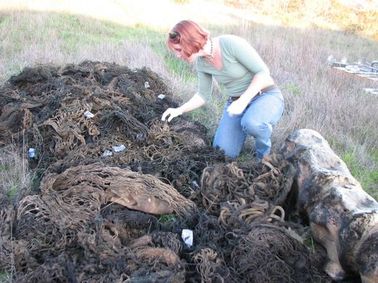
Although bacteria with waste-eating properties have been discovered in relatively pristine soils before, this is the first time that microbes that can survive in the very harsh conditions expected in radioactive waste disposal sites have been found. The disposal of nuclear waste is very challenging, with very large volumes destined for burial deep underground. The largest volume of radioactive waste, termed 'intermediate level', will be encased in concrete prior to disposal into underground vaults, researchers said. When ground waters eventually reach these waste materials, they will react with the cement and become highly alkaline. This change drives a series of chemical reactions, triggering the breakdown of the various 'cellulose' based materials that are present in these complex wastes. One such product linked to these activities, isosaccharinic acid (ISA), causes much concern as it can react with a wide range of radionuclides - unstable and toxic elements that are formed during the production of nuclear power and make up the radioactive component of nuclear waste. If the ISA binds to radionuclides, such as uranium, then the radionuclides will become far more soluble and more likely to flow out of the underground vaults to surface environments, where they could enter drinking water or the food chain. However, the researchers' new findings indicate that micro-organisms may prevent this becoming a problem. Working on soil samples from a highly alkaline industrial site in the Peak District in the UK, which is not radioactive but does suffer from severe contamination with highly alkaline lime kiln wastes, they discovered specialist "extremophile" bacteria that thrive under the alkaline conditions expected in cement-based radioactive waste. The organisms are not only superbly adapted to live in the highly alkaline lime wastes, but they can use the ISA as a source of food and energy under conditions that mimic those expected in and around intermediate level radioactive waste disposal sites. "Nuclear waste will remain buried deep underground for many thousands of years so there is plenty of time for the bacteria to become adapted," said Professor Jonathan Lloyd, from the University of Manchester's School of Earth, Atmospheric and Environmental Sciences, said. The findings are published in the ISME journal. Source: Press Trust of India http://www.sott.net/article/285569-Scientists-discover-nuclear-waste-eating-bacteria Published on 12 May 2014 CLIMATE CHANGE IS VERY REAL - BUT THE OFFICIALS HAVE JEOPARDIZED OUR ABILITY TO PREPARE FOR THE FUTURE Global warming models/predictions have been an abject failure for 20 years, and yet the IPCC claims ever-higher certainty? How does this happen and what comes next? All papers and charts are publicly available information, or you send us an email and we will forward the source/citation for any information. Most of the citations can already be found at the Links button at our website, under the Counterstrike Links. Our Websites: http://www.suspicious0bservers.org ; http://www.ObservatoryProject.com Category Science & Technology ; Licence Creative Commons Attribution licence (reuse allowed) Dead whales (and other animals) are showing up, bringing us a message the entire world should see31/1/2014 More people are starting to look at what we've done to this planet, especially since the birth of the technological revolution. Our oceans have been suffering for a very long time, with countless oil spills and toxic waste dumped into them every single day from industrial practices and more. Despite having numerous ways to operate in a fashion that is more harmonious with the planet, we continue to choose to destroy our planet on a daily basis, and we can't afford to do that anymore. Despite how much our planet is suffering, people everyday are starting wake up and realize that we really do need to look at, question, and change the way we operate here on planet Earth. This shift in perception alone can help springboard us towards change, and creating a new experience for us and other beings who we share the planet with. Whales have been showing up dead on multiple beaches, bringing us a message with stomachs full of plastic. This has happened multiple times. In the summer of july 2013, a sperm whale was stranded on Tershelling, a Northern island in the Netherlands. The whale swallowed 56 different plastic items that totalled over 37 pounds. In april 2010, a gray whale died after stranding itself on a West Seattle beach, it was found to have over 20 plastic bags, small towels, surgical gloves, plastic pieces, duct tape, and more in its system. In March of 2013 a dead sperm whale washed up on Spain's South coast which swallowed 17kg of plastic waste. The list goes on and on. Keep in mind, these are whales who choose to beach themselves or have washed up on shore, think about all the whales and other marine beings that don't. These are not uncommon events, in 1989 a stranded sperm whale in the Lavezzi Islands died of a stomach obstruction after accidentally ingesting plastic bags and 100 feet of plastic sheeting. A paper published in 1990 reports that a sperm whale in Iceland died due to a complete obstruction of the gut with plastic marine debris. In August 2008, a sperm whale washed up dead on the beach near Point Reyes, California, with 450 Pounds of fishing net, plastic bags and rope found in its stomach (see picture above) In 2008, the California Marine Mammal Stranding Database recorded another sperm whale with enormous amounts of plastic and fish netting in its stomach. I'll stop there as there are countless examples. By now, you've probably heard of "The Great Garbage Patch," it's an area the size of Queensland, Australia where there is approximately one million tonnes of plastic spread throughout the ocean. Drag a net in any area of this part of the ocean and you will pick up toxic, discarded plastic. We've shown this video before, but here it is again just in case you missed it. With the Fukushima disaster and the famous gulf oil spill in 2004, as well as many more we don't even hear about, I'm surprised anything at all is alive in our oceans. These events, and many more should stop everyone from their daily routines, just stop, and say no more. The world should not continue forward, people should not go to work, it's time for all of us to stop, come together and change this world. Now is our window of opportunity. These events should really serve as triggers for us to wake up and change our ways.
A mass collective desire to change these things is what has, and will put the human race on a journey to do so. It's time to educate ourselves about what is really happening on the planet, and bring awareness to the most important issues we must tackle today. This is why alternative media outlets are so important, they bring awareness and shed light on what corporate media hardly covers. Our planet is calling on us to change our ways, and the change starts with you. At the same time, our planet is calling for a massive transformation. All of the corporations and toxic industrial practices must stop what they are doing. New, clean , green technology is available and we could easily replace all of these plastics with hemp, and much much more. We have so many solutions, yet we do not implement them. I want to provide solutions to this problem, and it's hard to come up with them other than making changes in your own lives. There are wonderful individuals like this one, a 19 year old boy who developed a cleanup array that could remove over seven million tons of plastic from our oceans. Sources: As the oceans choke on plastic so do the whales. Spanish sperm whale death linked to UK supermarket supplier's plastic |
QUICK INFO
Author:
_Messenger Spirit This section is for interesting items which are brought to my attention but which do not merit a separate article.
I welcome your comments, questions or suggestions on any topics you wish to contribute to this section. Please submit these on the Contact and Feedback Form PLEASE DO NOT SUBMIT COMMENTS ON THE FORM WHICH APPEARS UNDER ITEMS ON 'QUICK INFO'; THIS SYSTEM IS NOT WORKING. Categories
All
Archives
January 2026
|


RSS Feed