https://spaceweather.com/
|
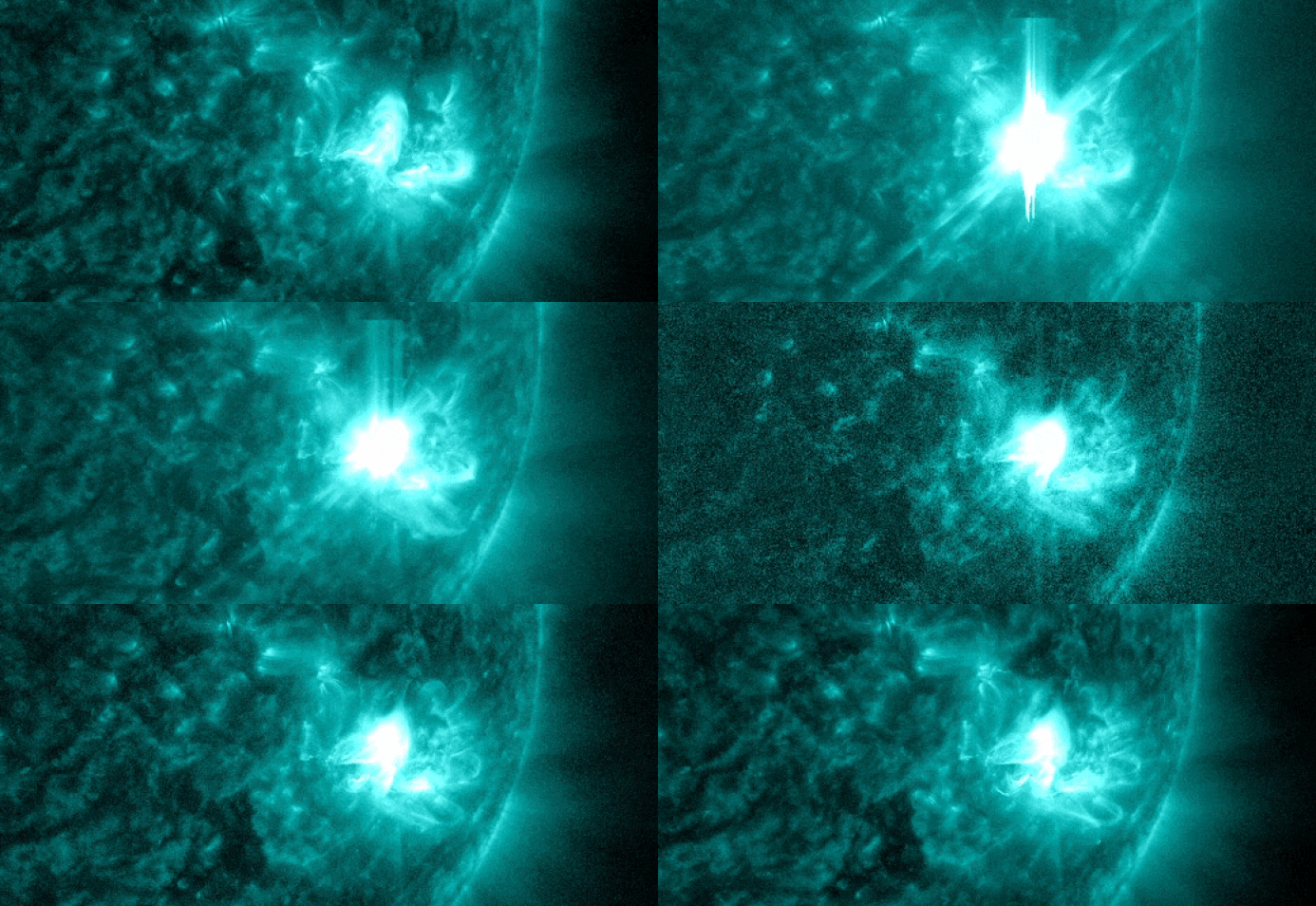
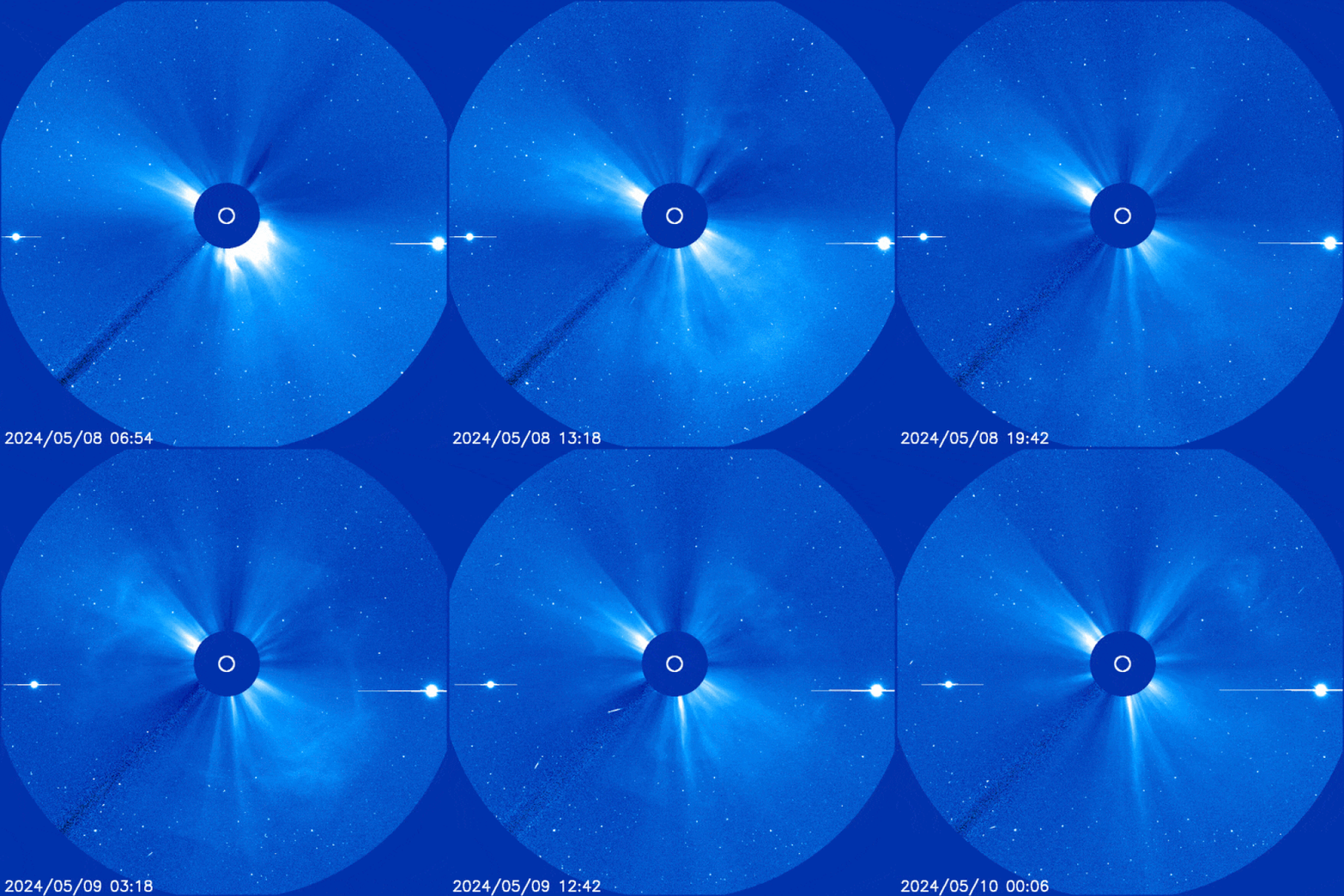
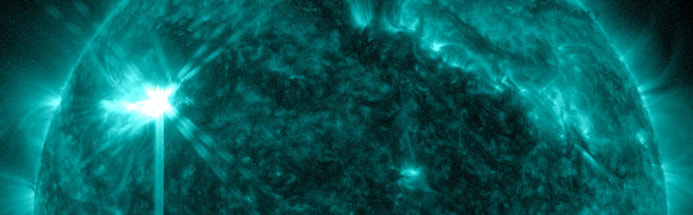
Sunspot 4274 erupted again yesterday, producing a powerful X4-class solar flare. Unlike previous explosions, this one was not directly facing Earth. Most of the CME will miss our planet. Even so, a glancing blow is possible on Nov. 16th. NOAA forecasters have issued a G1-class geomagnetic storm watch for Nov. 16th and 17th.
https://spaceweather.com/
0 Comments
In the sun's southern hemisphere, a large sunspot is turning toward Earth: movie. Sunspot 4197 is about 1/3rd the size of Carrington's sunspot. It looks even bigger though, because it is surrounded by a coterie of smaller spots. The crowd has a complex magnetic field that poses a threat for X-class solar flares. Solar flare alerts: SMS Text SUNSPOTS AT SUNSET: Sunspot 4197 is so large, it's altering the appearance of the setting sun. On Aug. 27th, Wolfgang Ott photographed the phenomenon as the sun dipped into the North Sea near St. Peter Ording, Germany: "We were treated to a beautiful sunset this evening," says Ott. "The individual sunspot groups were easy to recognize."
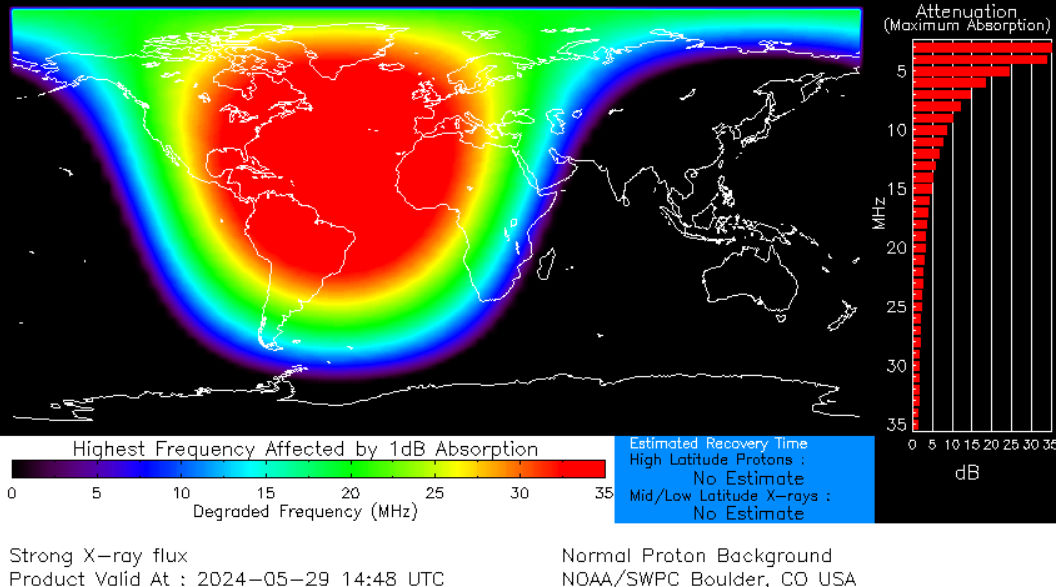
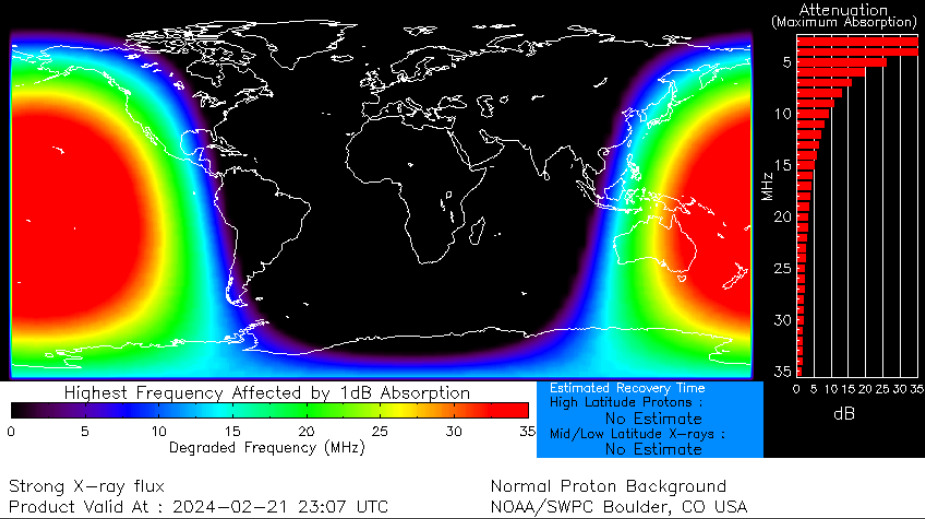
The solar disk itself looks unusual--slightly squashed, almost egg-shaped. This is an effect of refraction. Thick layers of air near the horizon bend sunlight unevenly, distorting the sun’s outline. The same thick air that deforms the sun also dims it, making the sunspots easier to see. However, don't let that lure you into staring. Even a dim sun can hurt your eyes, especially when it is magnified by optics. If you want to photograph the sunset as Ott did, please use the camera's LCD screen for safe viewfinding. https://spaceweather.com/ As the solstice sun hangs high in the skies of the northern hemisphere, our planet is getting hit by solar flares. In the past week there have been two X-class, one near-X, and dozens of lesser flares: Each of the spikes in the graph above represents a pulse of X-radiation hitting Earth's upper atmosphere, ionizing the air at the edge of space. This has caused a rolling series of shortwave radio communication blackouts around our planet. The deepest blackouts occurred on June 15th (North America), June 17th (Hawaii) and June 19-20th (Hawaii). During those events, ham radio operators would have noticed loss of signal at frequencies below 25 MHz.
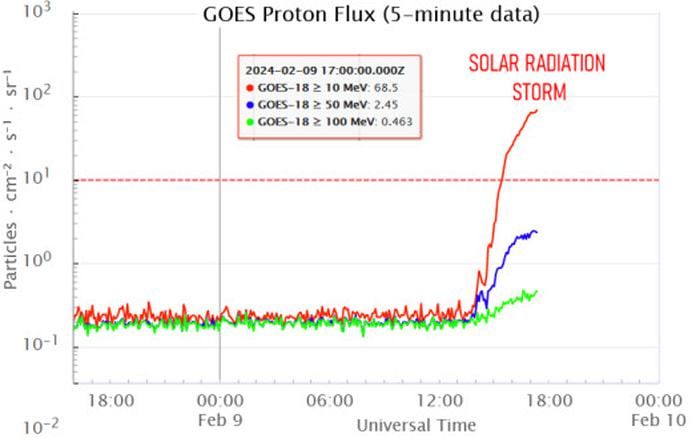
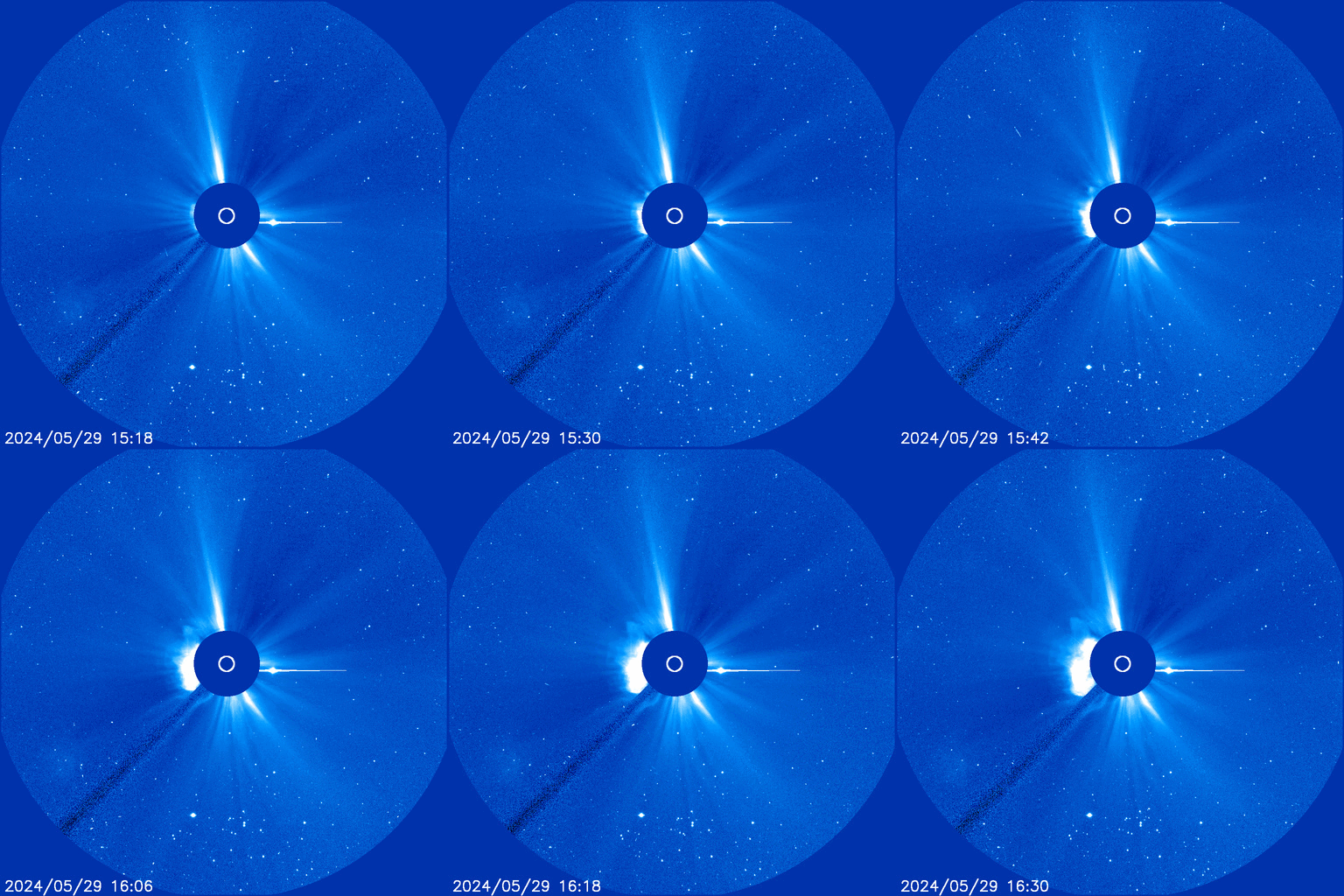
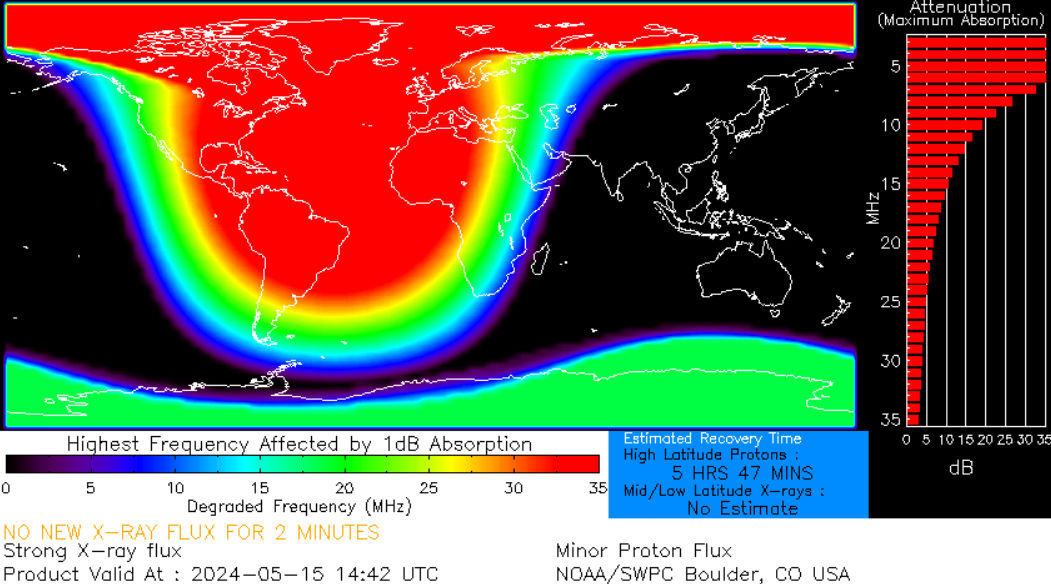
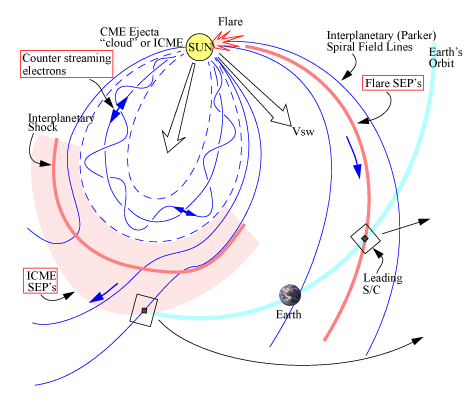
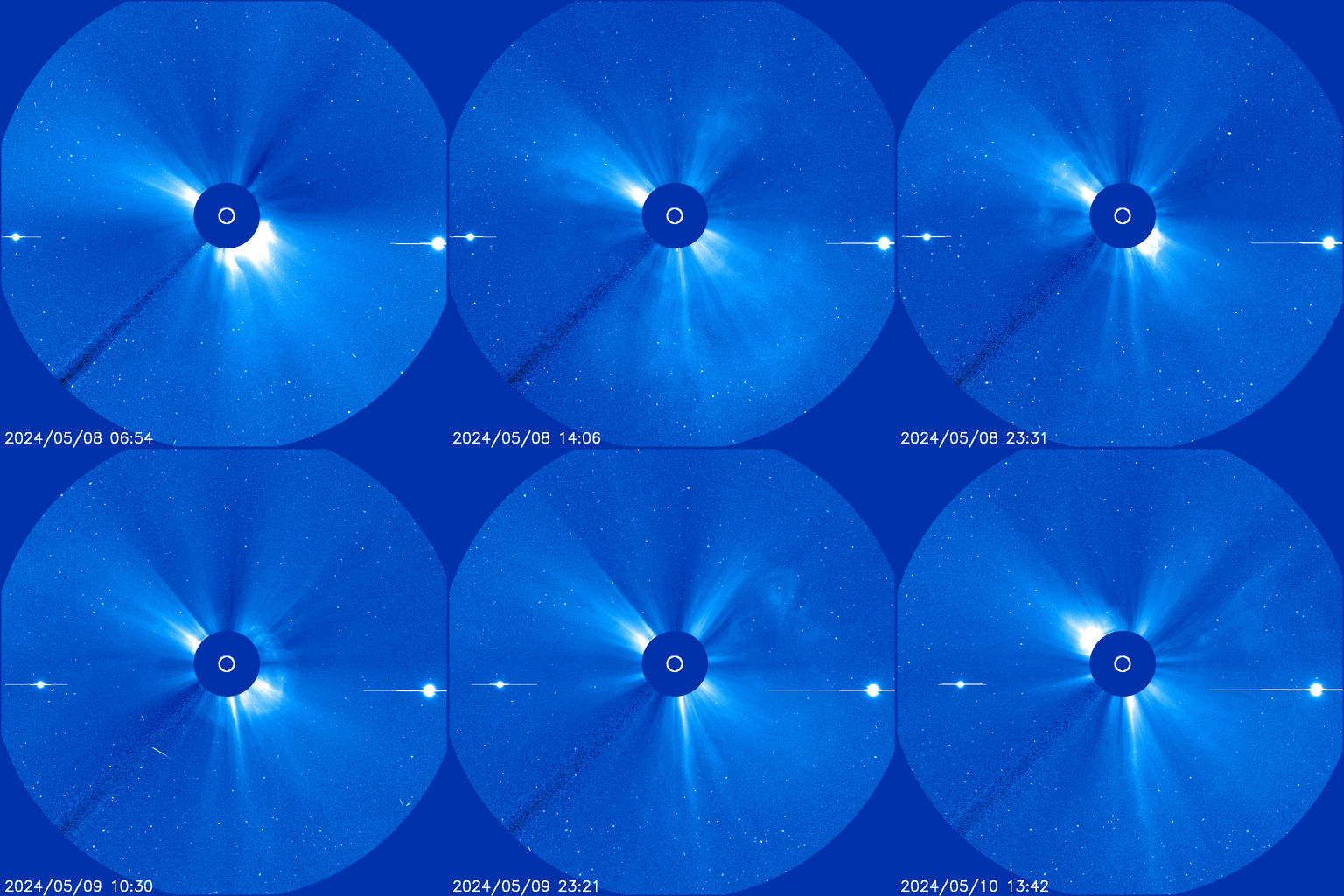
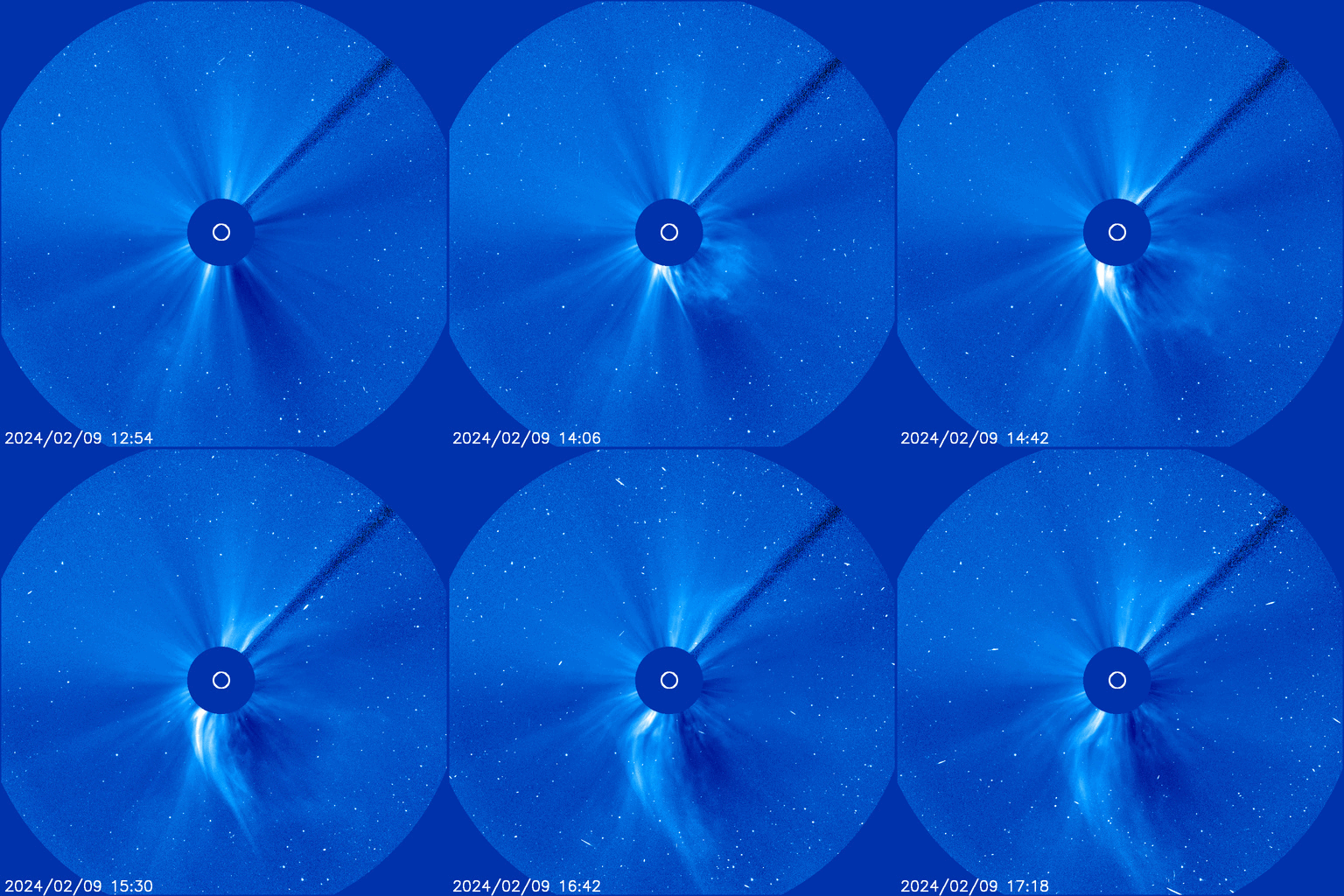
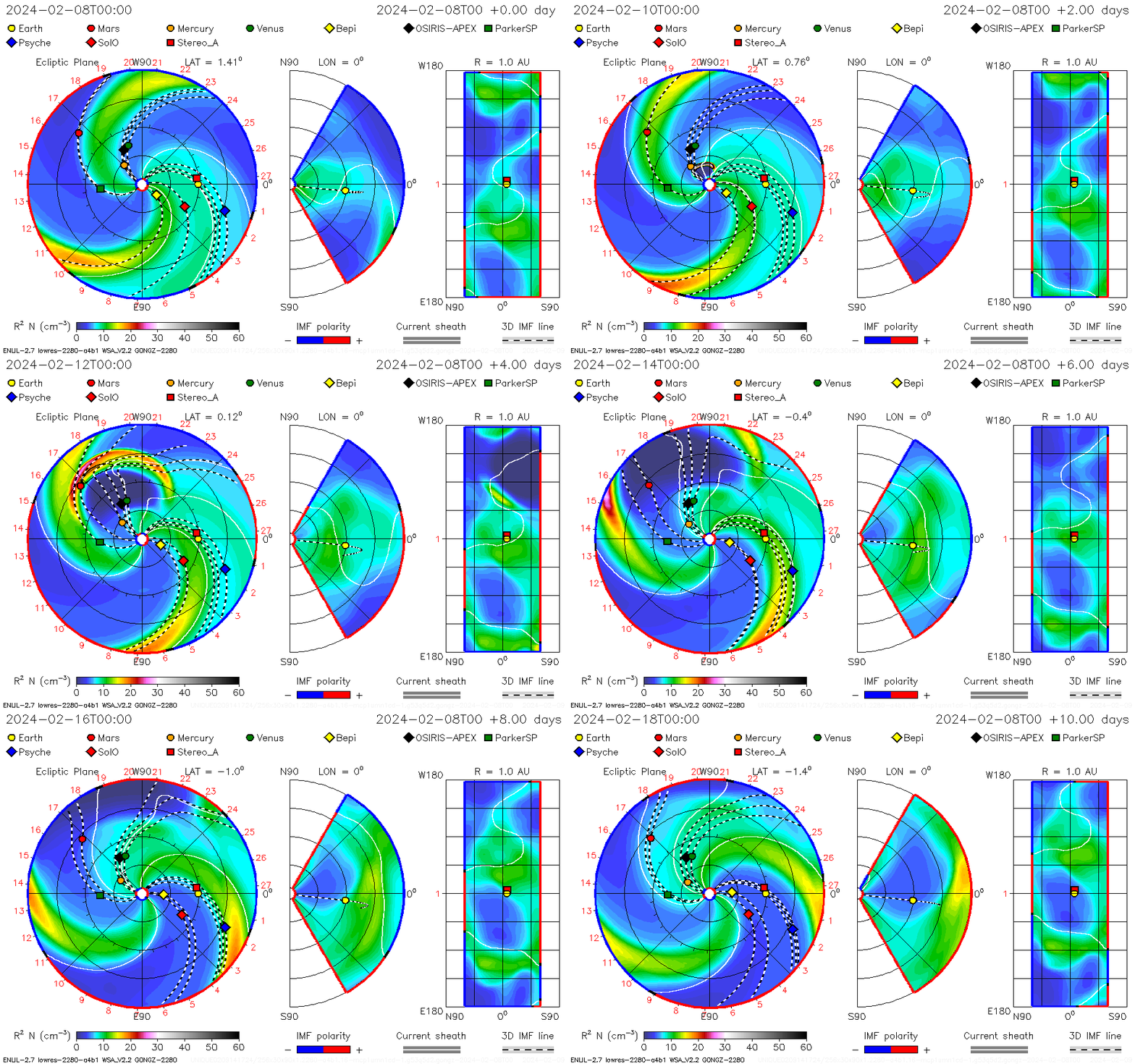
As northern summer begins, the flares are set to continue. Their source is unstable sunspot 4114, which will remain on the Earthside of the sun for a few more days before it disappears over the sun's western limb. Dates of special interest include June 23-24, when the sunspot will be magnetically connected to Earth via the Parker Spiral. Any flares around that time will accelerate energetic protons directly toward our planet and could spark a solar radiation storm. https://spaceweather.com/ Big old sunspot 4100 finally exploded--and it was a doozy. On May 31st at 00:05 UTC, Earth-orbiting satellites detected an M8.2-class solar flare. The explosion lasted more than 3 hours: A long-duration M8.2-class solar flare recorded by NASA's Solar Dynamics Observatory Although the flare was not technically X-class, it was close. Moreover, it was a slow explosion with lots of power "under the curve." The blast was able to lift a massive CME out of the sun's atmosphere. Indeed, shortly after the flare, SOHO coronagraphs recorded a bright halo CME heading directly for our planet: This is a very fast-moving CME. Type II radio emissions from shock waves within the cloud suggest it is traveling 1,938 km/s or 4.3 million mph. When it strikes Earth, the CME could spark severe geomagnetic storms with auroras at mid- to low latitudes. Stay tuned! https://spaceweather.com/ PROTONS ARE RAINING DOWN ON EARTH: Yesterday's X1.2-class solar flare accelerated a fusillade of energetic protons toward Earth, and they are now raining down on the upper atmosphere. For a while on May 13th, the downpour was intense enough to trigger an S1-class radiation storm warning, but today the proton rain is subsiding. Current radiation levels pose no threat to astronauts or air travelers. Radiation storm alerts: SMS Text STRONG SOLAR ACTIVITY: After weeks of calm, solar activity is suddenly high again, with two strong solar flares erupting from opposite sides of the sun: The first of these flares (X1.2) caused a brief shortwave blackout over the Americas and hurled a CME into space. A NASA model shows the CME hitting Mercury, grazing Venus, and completely missing Earth later this week.
The second flare (M5.3) caused a longer shortwave radio blackout over southeast Asia and probably hurled a CME into space. If so, it could have an Earth-directed component. Confirmation awaits fresh data from SOHO coronagraphs. Solar flare alerts: SMS Text https://spaceweather.com/ Yesterday, the sun surprised forecasters with a dramatic X1.1-class solar flare (March 28th @ 1520 UTC). The explosion caused a shortwave radio blackout over the Americas, and it hurled a massive CME into space. That CME will narrowly miss Earth. The sunspot that caused the flare (AR4046) is now turning toward Earth, so future explosions may be more effective.
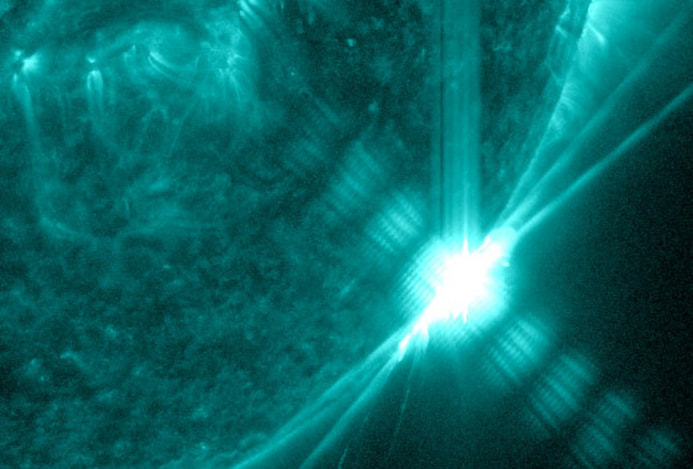
https://spaceweather.com/ Surprising forecasters, today the sun produced a dramatic X1.1-class solar flare (March 28th @ 1520 UTC) with a shortwave radio blackout over the Americas. NASA's Solar Dynamics Observatory photographed massive plumes of plasma emerging from the blast site: The source of the flare is a new sunspot emerging over the sun's eastern limb. This sunspot will turn toward Earth in the days ahead, putting our planet in the crosshairs of future eruptions. Stay tuned!
https://spaceweather.com/ Sunspot AR3947 is sizzling with activity. Since Friday it has produced three X-class solar flares and multiple strong M-flares. NOAA's GOES-16 satellite recorded the extreme ultraviolet and X-ray flashes: Each flare has produced a shortwave radio blackout on Earth. Almost all longitudes of our planet have experienced intermittent loss of signal below 20 MHz during local daylight hours. Because of these flares, long-distance propagation has been unreliable.
Remarkably, no significant CMEs have emerged. These explosions have not lifted much material out of the sun's atmosphere. Future blasts may behave differently, however, and the activity shows no sign of abating as the sunspot turns toward Earth. Stay tuned! https://spaceweather.com/ The sun is crackling with solar flares. In the last 48 hours alone it has produced an X-flare, a double X-flare (pictured below), and more than a dozen M-class solar flares: Repeated pulses of extreme ultraviolet radiation have ionized the top of Earth's atmosphere, creating a series of shortwave radio blackouts rolling around all longitudes of our planet. Global ham radio transmissions below 20 MHz have not been very reliable for the last two days.
More flares are in the offing. There are currently five sunspots on the solar disk with mixed-polarity magnetic fields capable of producing M-to-X-class solar flares. NOAA forecasters estimate a 30% chance of additional X-flares on Dec. 31st. https://spaceweather.com/ Big sunspot 3932 erupted on Dec. 23rd, producing an M8.9-class solar flare, only percentage points from category X. NOAA's GOES-16 satellite recorded the extreme ultraviolet flash: The flare produced a brief shortwave radio blackout over Africa and the South Atlantic Ocean. Ham radio operators in the area may have noticed loss of signal below 20 MHz between 1112 UTC and 1127 UTC.
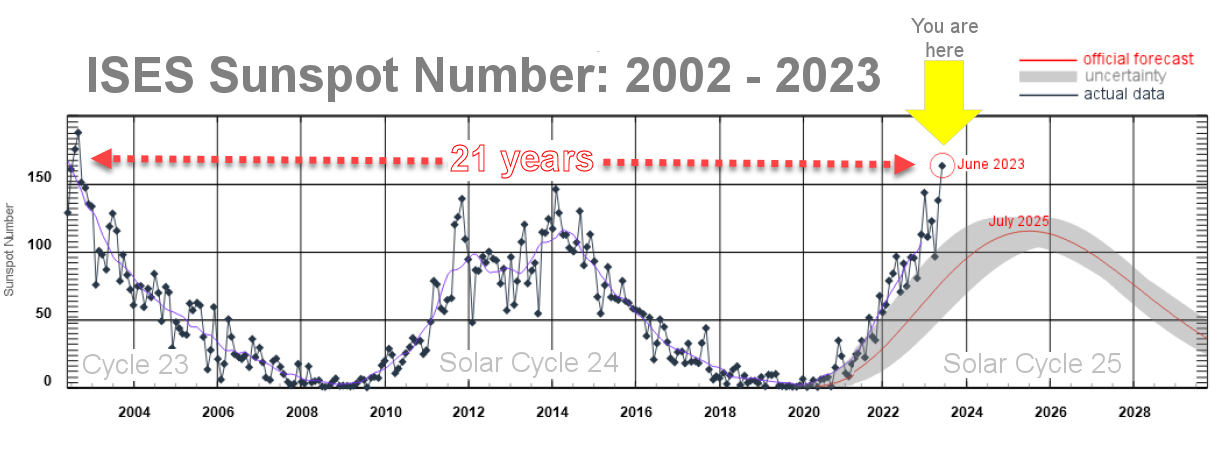
Of greater interest is the coronal mass ejection (CME). SOHO coronagraphs recorded a fast CME emerging from the blast site. The bulk of the CME will miss Earth to the south, however, there is still a significant Earth-directed component. NOAA and NASA forecast models predict it will arrive on Dec. 25th, potentially sparking a G1 to G2-class geomagnetic storm. https://spaceweather.com/ "Today we have three big things on the sun: A gigantic string of big and active sunspots, a large sunspot just coming into view, and a magnificent solar prominence," reports Maximilian-Vlad Teodorescu of the Institute of Space Science in Magurele, Romania. He photographed them all on Oct. 29th: "All are far above the usual size of sunspots and prominences," says Teodorescu. "What a wonderful solar maximum!"
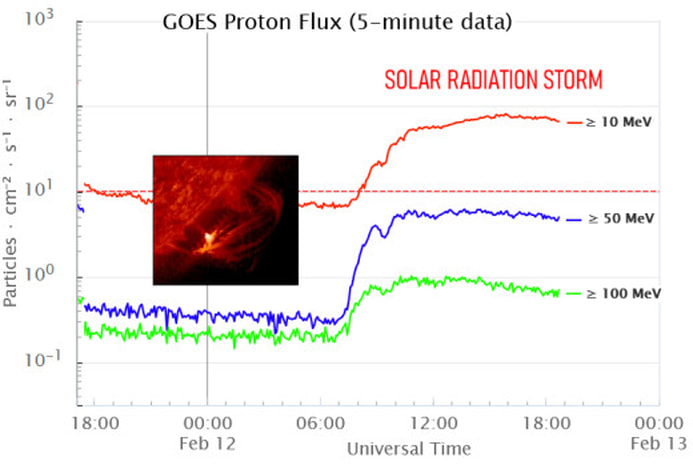
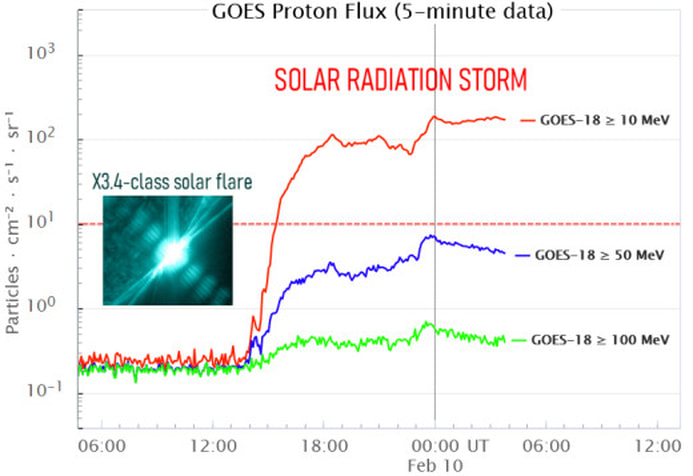
Three of the sunspots Teodorescu photographed pose a threat for very strong solar flares: 3869, 3872, 3874 have 'beta-gamma-delta' magnetic fields in which opposite polarities are bumping together in dangerous proximity. NOAA forecasters estimate a 75% chance of M-class solar flares and a 30% chance of X-flares during the next 24 hours. https://spaceweather.com/ For the 3rd day in a row, energetic protons are raining down on Earth. It's an S2-class radiation storm. The protons were accelerated by X-class solar flares on Oct. 24th and 26th. As a result of the storm, a shortwave radio blackout is underway inside the Arctic Circle, and cameras on spacecraft are being fogged. Indeed, most of the speckles in the SOHO coronagraph movie highlighted below are solar protons hitting the camera. This could continue for at least another 24 hours.
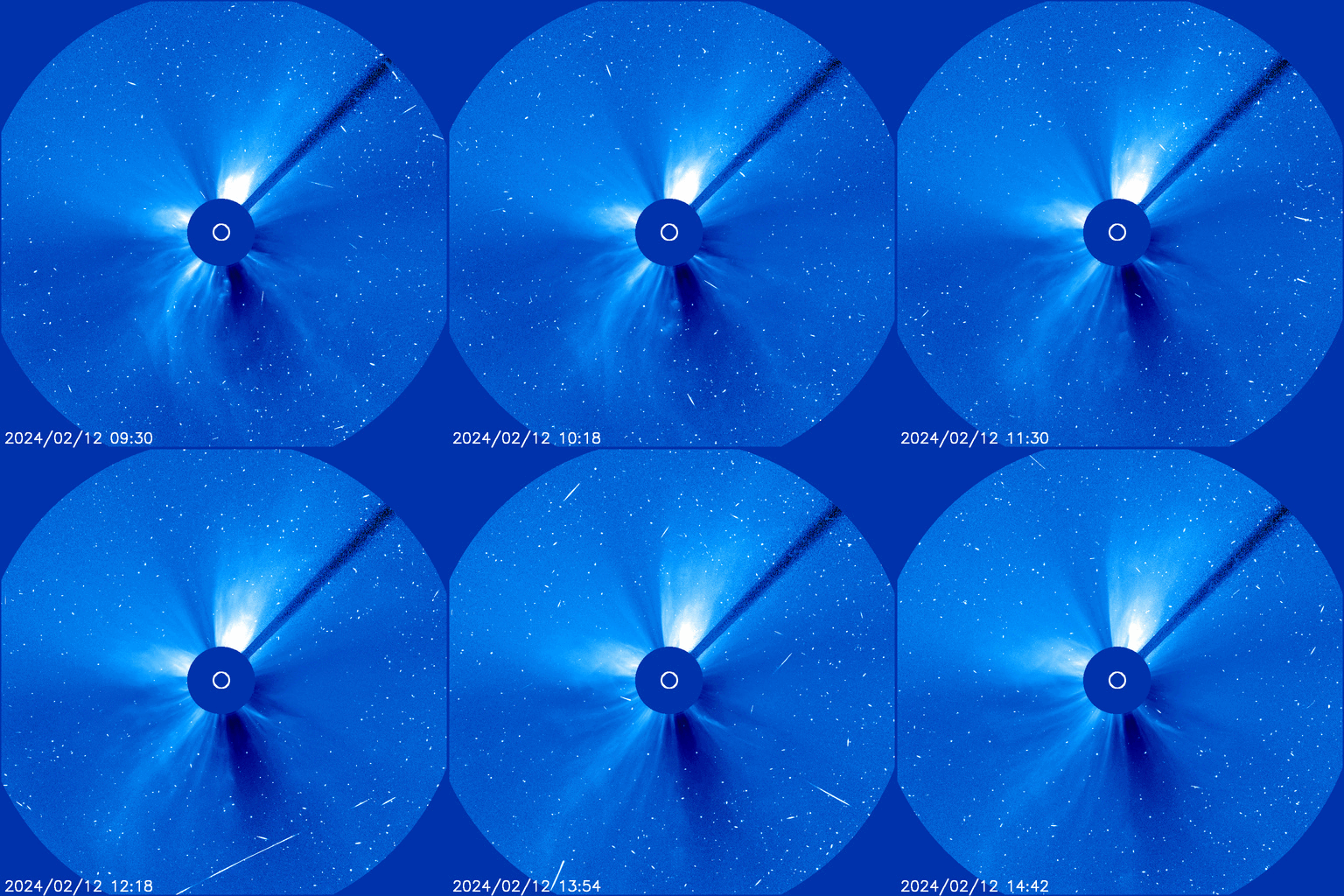
https://spaceweather.com/ Sunspot AR3848 was directly facing Earth this morning, Oct. 8th (0156 UTC), when it unleashed a powerful X1.8-class solar flare. NASA's Solar Dynamics Observatory recorded the extreme ultraviolet flash: This explosions lasted more than 4 hours, so long that it lifted a massive CME out of the sun's atmosphere. Take a look at these preliminary coronagraph images from NASA's STEREO-A spacecraft. This CME will certainly hit Earth later this week, potentially sparking a new round of geomagnetic storms. Stay tuned for a refined forecast.
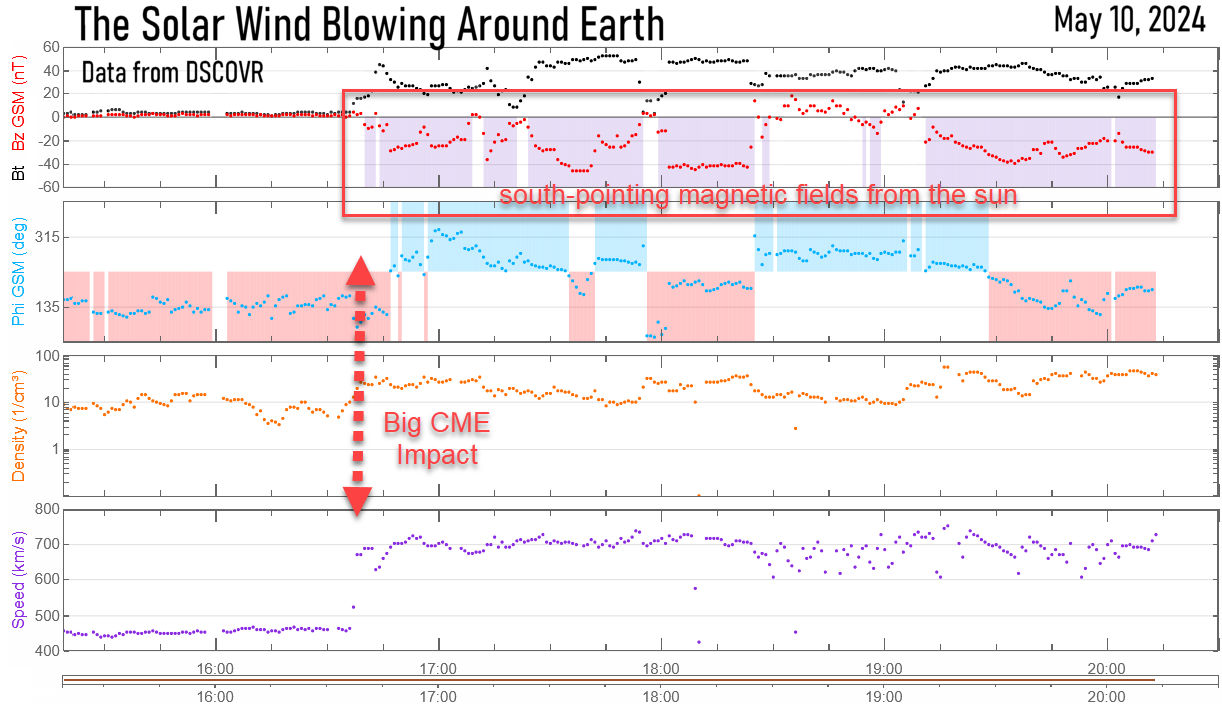
https://spaceweather.com/ Confirmed: Two CMEs are now heading for Earth following consecutive X-flares (X7.1 and X9.1) from active sunspot AR3842. According to NOAA and NASA models, the first will strike Earth on Oct 4th and the second (more potent) will strike on Oct. 6th. The dual impacts could spark strong G3-class geomagnetic storms with auroras at mid-latitudes, especially on Oct. 6th.
https://spaceweather.com/ Sunspot AR3842 exploded again on Oct. 3rd, producing the strongest solar flare of Solar Cycle 25 so far. NASA's Solar Dynamics Observatory recorded the X9.1-category blast: Radiation from the flare ionized the top of Earth's atmosphere and caused a deep shortwave blackout over Africa and the South Atlantic. Ham radio operators in the area may have noticed loss of signal at frequencies below 30 MHz for as much as a half an hour after 12:18 UTC.
The explosion also produced a halo CME. Now that a full set of images has arrived from the Solar and Heliospheric Observatory (SOHO), it's clear that the CME is potent. NOAA forecasts of a strong geomagnetic storm when it arrives on Oct. 6th are probably correct. https://spaceweather.com/ |
QUICK INFO
Author:
_Messenger Spirit This section is for interesting items which are brought to my attention but which do not merit a separate article.
I welcome your comments, questions or suggestions on any topics you wish to contribute to this section. Please submit these on the Contact and Feedback Form PLEASE DO NOT SUBMIT COMMENTS ON THE FORM WHICH APPEARS UNDER ITEMS ON 'QUICK INFO'; THIS SYSTEM IS NOT WORKING. Categories
All
Archives
November 2025
|

RSS Feed